Educational Game Development for Kids and Schools

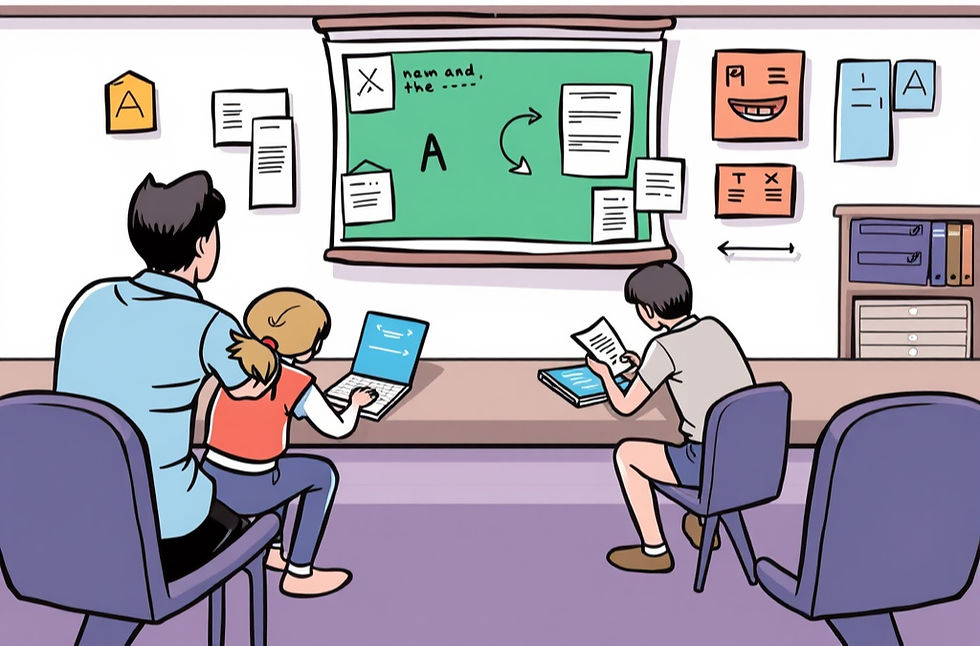
Educational game development for kids and schools is about creating games that help children learn through play, practice, feedback, and problem-solving. These games can support subjects like maths, science, language, history, coding, life skills, and classroom training.
A good educational game is not just a quiz with cartoons. It should connect the game activity to the learning goal. If children are learning maths, the game should help them think through numbers. If they are learning science, the game should help them test ideas, observe results, and understand cause and effect.
Why educational games work for children
Children usually learn better when they are active.
A game gives them something to do. They can try, fail, repeat, and improve without feeling like they are only being tested. This makes learning feel less heavy and more natural.
Educational games can also give instant feedback. A child does not need to wait for a teacher to check every answer. The game can show what went wrong, give a hint, and let the child try again.
This repeat cycle is useful because learning often needs practice.
What schools should look for
Schools should not choose educational games only because they look colorful.
The game should match the age group, subject, classroom goal, and skill level of the students. A game for grade 2 maths should not feel like a game for teenagers. A science game for middle school should let students interact with concepts, not just read facts.
Schools should check:
Is the learning goal clear?
Is the game age-appropriate?
Can teachers track progress?
Does the game give useful feedback?
Does it work on school devices?
Is it easy for students to understand?
Can it support different learning levels?
Is the content safe for children?
A game that is fun but does not teach clearly may not be useful in school.
Common types of educational games
Maths learning games
Maths games can help children practice counting, addition, subtraction, multiplication, fractions, geometry, logic, and problem-solving. The best maths games make children use the concept inside the gameplay.
Science games
Science games can teach physics, chemistry, biology, space, environment, and experiments. They work well when students can test something and see what happens.
Language learning games
Language games can help with spelling, vocabulary, reading, grammar, sentence building, and pronunciation. These games should give repeated practice without making the child feel bored.
Coding and logic games
Coding games teach sequencing, loops, conditions, problem-solving, and debugging. They are useful because children can learn computational thinking through visual actions.
Life skills games
Life skills games can teach safety, hygiene, money basics, emotional awareness, teamwork, kindness, and decision-making. These are useful for younger students and special learning programs.
What makes an educational game good?
A good educational game has a clear connection between play and learning.
The child should not feel like the game part and the learning part are separate. For example, if a game gives maths questions only between levels, the learning may feel like an interruption. But if solving a maths problem helps the character move, build, unlock, or win, the learning becomes part of the play.
Good educational games usually include:
Simple controls
Clear instructions
Age-friendly visuals
Short learning loops
Hints and corrections
Rewards that support learning
Progress tracking
Safe content
Teacher or parent review options
The game should also avoid too much pressure. For younger children, harsh failure screens, loud sounds, or stressful timers can make learning unpleasant.
Classroom use matters
An educational game should fit the classroom.
Teachers need to know how to use it, when to use it, and what learning outcome it supports. If the game is too complicated to set up, teachers may stop using it.
A strong school-focused game may include dashboards, lesson modes, student profiles, progress reports, difficulty levels, and offline or low-data options.
It should also be easy to pause, replay, and restart. Classroom time is limited, so the game must respect the teacher’s workflow.
Final thoughts
Educational game development for kids and schools works best when learning is built into the game, not added later.
The goal is not to distract children with rewards. The goal is to help them understand, practice, remember, and improve.
A well-made educational game can support teachers, motivate students, and make difficult subjects easier to practice. But the game has to be designed around real learning first. Fun helps, but learning should lead.


Comments